
soft armor: a girl’s beauty
a visual story.
There is a girl who hides behind her beauty.
She doesn’t mean to -it’s just easier that way. The world is full of eyes, each one demanding something different, and she has learned to protect herself through softness and deception. She covers her insecurities with color, texture, and bloom, convincing herself that if she stays beautiful, no one will notice the parts of her that ache.
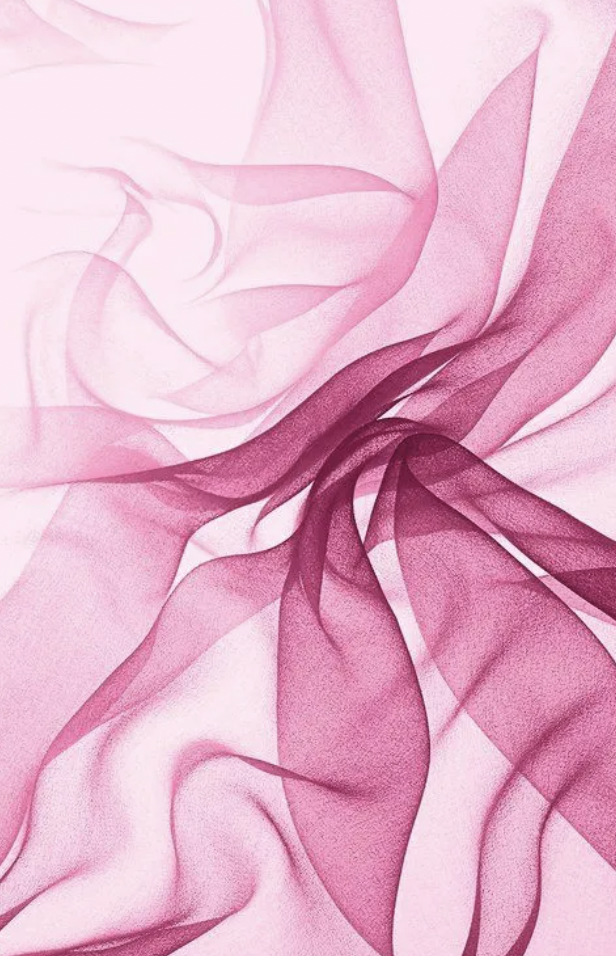
Our story begins with a wisp of chiffon -light, pink, and barely there. It twists like smoke and takes on any shape it covers. The folds of fabric move like thoughts, looping and folding over themselves.
In it lies her first layer of defense: beauty as distraction. It conceals what’s underneath -not deceitfully, but fearfully. As Berger (1972) explains in Ways of Seeing, women are often conditioned to view themselves through the eyes of others, becoming both the observer and the observed. Her softness is not vanity; it is survival, shaped by a gaze that demands she remain contained and pleasing.
Inside her, however, there is a life that stirs. The next image reveals a bee nestled within the heart of a flower, its body dusted in pollen.
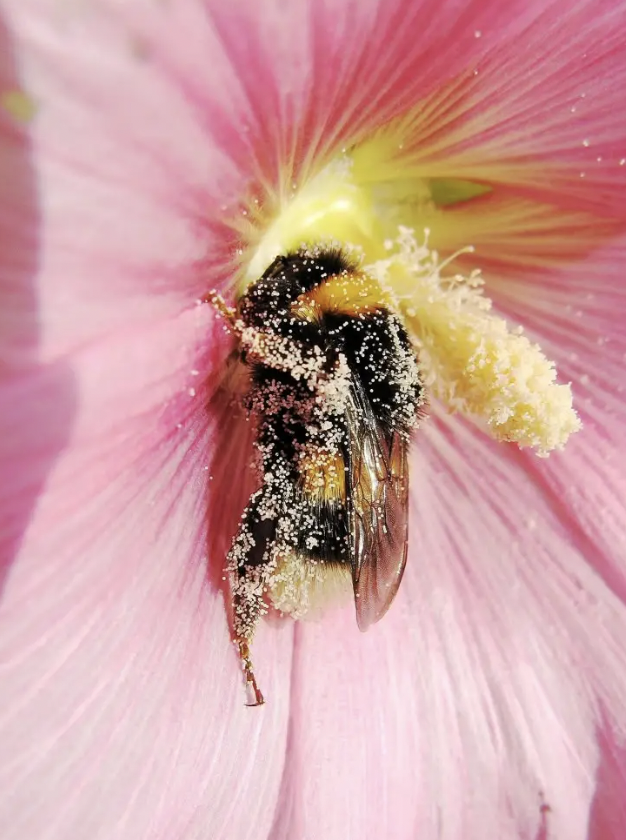
The scene is intimate -almost too close -showing both beauty and vulnerability in motion.
The bee burrows deep within her bloom, dusted in the very pollen it came to take. To others, she is the bloom: bright, sweet, and open. But to her, each touch feels like intrusion, every compliment another sting.
Still, the bee does what it must. She feels it as both creation and consumption: to be alive, she must let something in, even if it leaves her marked.
Feeling hollow and used after her moments of indulgence, she begins to turn inward. What once felt like connection now burns as regret, and the sweetness that drew others in, fills her with nausea.
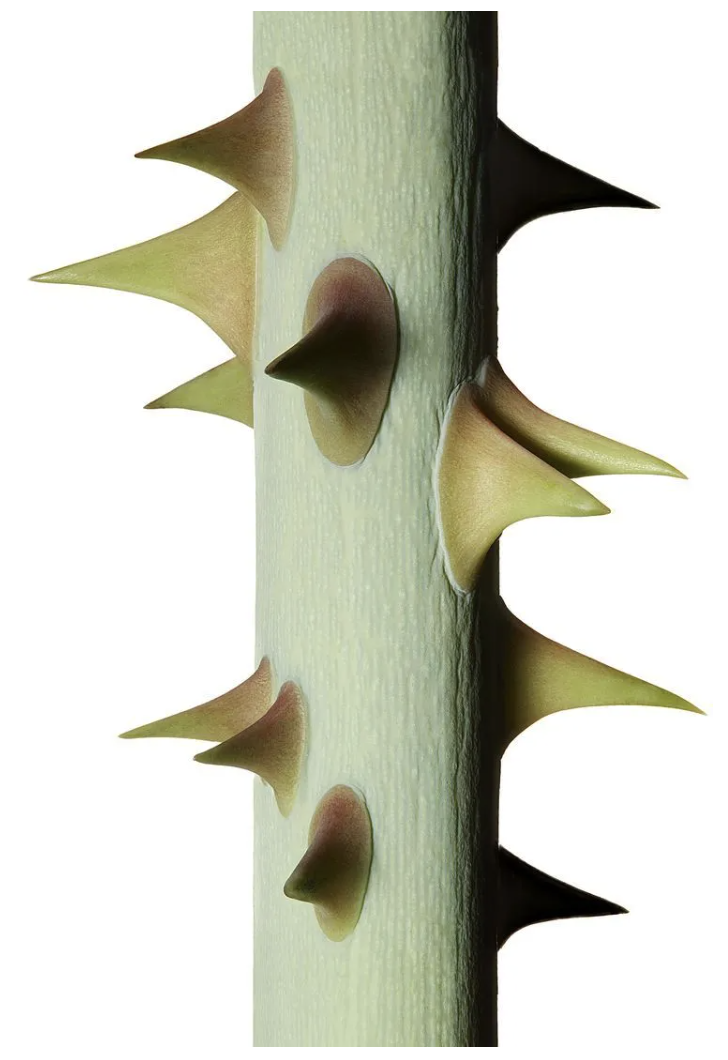
Her thorns. Sharp and deliberate, they grow from her surface like instinct. She does not mean to be cruel, only cautious.
Their pale green hue contrasts the softness of petals, and their symmetrical pattern suggests intention with control. She calls this her recklessness, though really it is self-preservation and harm.
Mulvey (1975) describes this phenomenon as part of visual culture’s tension between object and subject: to avoid being seen as an object, the woman often constructs barriers of resistance. Her thorns are her refusal to remain ornamental.
This is just a phase; however, it isn’t long before her world brightens again. Within this act of preservation, her world becomes a garden. Lush, colorful, and unreal.
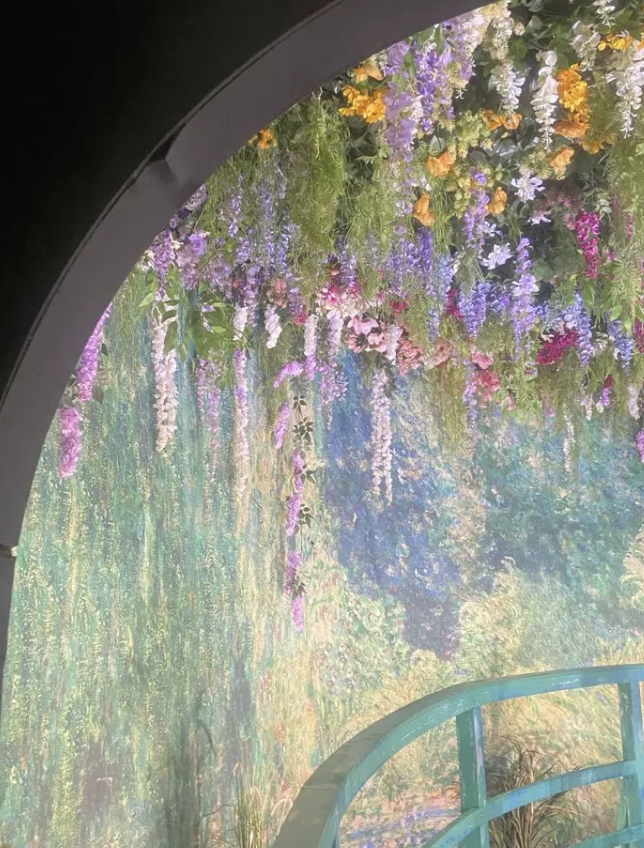
The Monet-like archway of wisteria and light paints her illusion of safety. The cascading flowers blur into pastel shades, creating a space too beautiful to be true. It’s how she sees herself when she pretends everything is fine.
She indulges in what feels like a dream. Only existing within this space because it feels gentle, but it’s also lonely.
The illusion of green, the softness of paint, the abundance of petals, suggest how easily we can lose ourselves in what we build to hide behind.
It isn’t long before this illusion fades out and everything numbs. She’s left feeling lonely again, unable to center herself without depending on anyone to catch her.
The garden she built to protect herself now feels like a cage of petals and hollow euphoria. The light changes now, the sky softening into rosy, golden, and purple hues, the melancholic warmth that makes everything go still.

The sinking sun feels like a quiet acknowledgment that beauty, too, must end. In its fading glow, then does she realize that even endings can be gentle and she can move on from this moment.
-- -- -- -- -- -- --
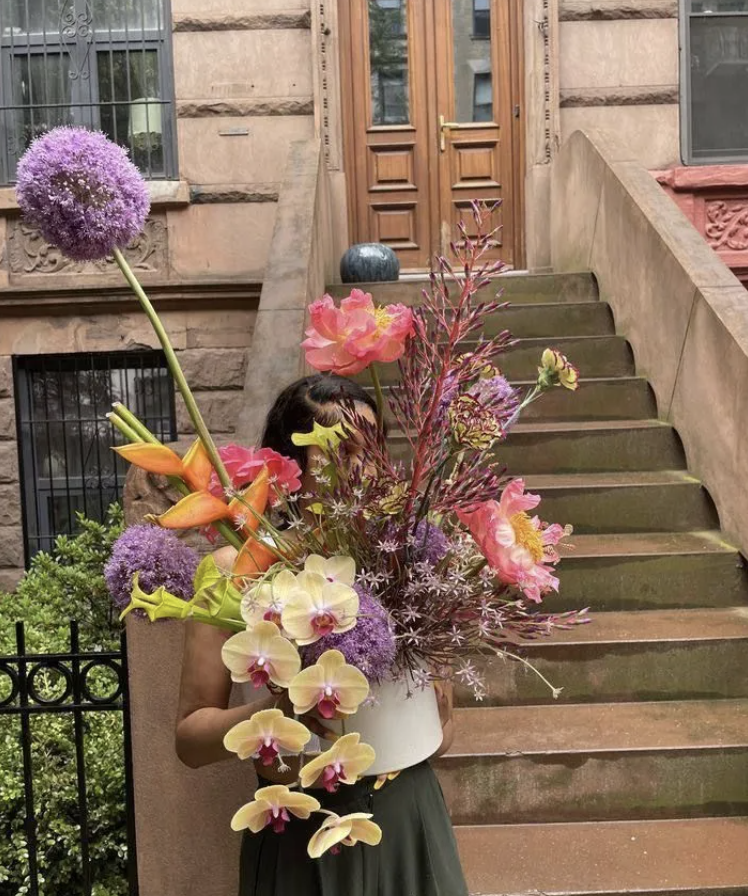
Then comes the moment of confrontation. A girl stands before a brownstone building, her face hidden by an explosion of flowers.
Each stem, each petal, overflows from her arms, a bouquet too grand to hold. The flowers are stunning, but they consume her. Her identity vanishes beneath their weight, and she hides behind her own beauty so completely that she becomes invisible.
Both pride and exhaustion can be captured in this moment. The doorway behind her looms like an entrance she cannot walk through, not until she puts the flowers down.
And finally, the light breaks.
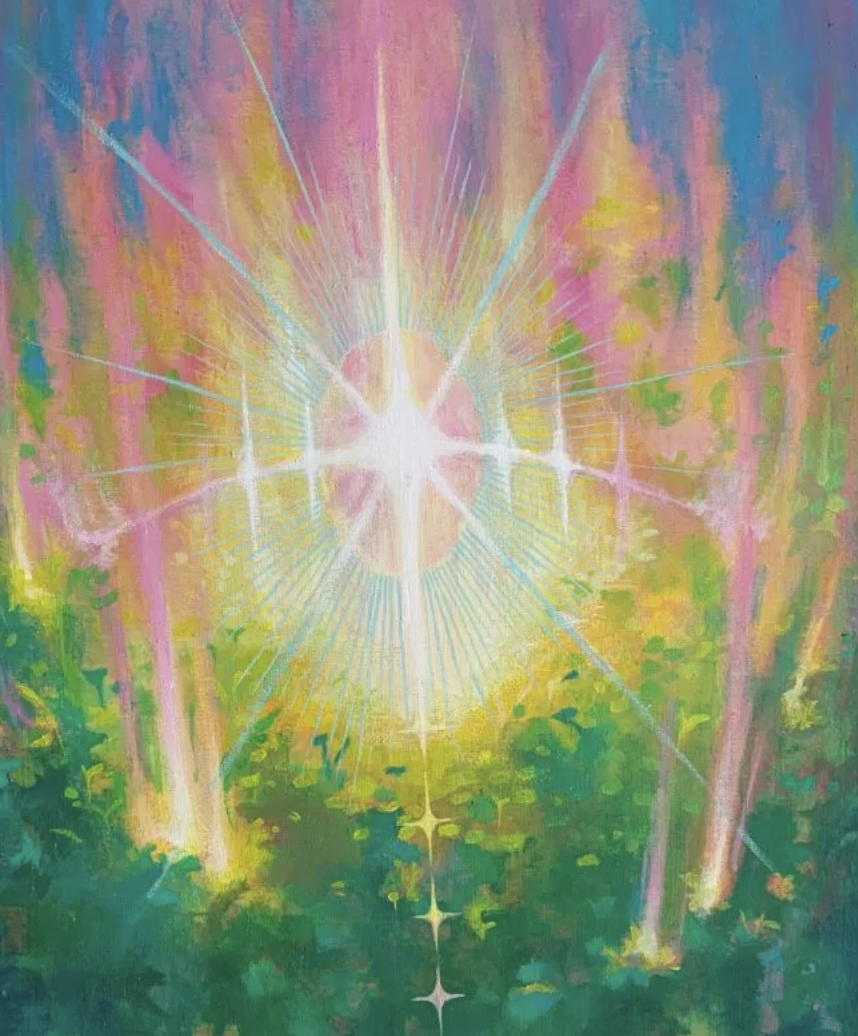
Radiance floods the frame with pinks, gold, and greens converging into one burst of illumination. The details are no longer restrained; they glow, pulse, and expand beyond their borders.
‘A Forest Birth’ by Parker Parrella. (2024)
This moment represents her release: she no longer hides, no longer apologizes for what she is. Her beauty is no longer a mask but a mirror, reflecting all her contradictions. Hooks (1995) argues that art and self-expression allow women to reclaim their image, using visibility as power rather than submission. The girl’s final transformation mirrors this reclamation: she defines herself not by how she is seen, but by what she chooses to reveal.
References
Berger, J. (1972). Ways of seeing. Internet Archive https://share.google/aC2cUseeygimYFyXG
Additional: https://www.reddit.com/r/books/comments/96pe0o/ways_of_seeing_by_john_berger_1972_changed_how_i/
Hooks, b. (1995). Art on my mind: Visual politics. https://share.google/VW3Iav5MwdSlfZZtX
Mulvey, L. (1975). Visual pleasure and narrative cinema. Screen, 16(3), 6–18. https://doi.org/10.1093/screen/16.3.6
Additional: https://share.google/MWLNxYuNQ5al0R1Z2
Image 1 (girl holding bouquet): @Crystal on Pinterest
Image 2 (sun setting on the horizon): @A Shaltot on Pinterest
Image 3 (monet-like archway with flowers): @Zahra Bryant on Pinterest
Image 4 (green stem with thorns): @BigKids on Pinterest
Image 5 (bee covered in pollen): @Cristine Potocar on Pinterest
Image 6 (light pink chiffon): @ColorsBridesmaid on Pinterest
Authors Notes
The story ends not with transformation, but with realization. The girl learns that to be seen does not mean to be exposed, and to be soft does not mean to be fragile.
I wanted to tell the story of a girl’s experience. One we often see depicted in media that portray different approaches to the ‘female’ experience. I love textures and colors and wanted to incorporate them into the story's language. The chiffon’s airy texture whispers, the bee hums with life, the thorns prick, the sun sets, and the light forgives. Together, they tell the story of a girl who mistook her softness for armor until she learned that it was, in truth, her strength.
